Sustainable Manufacturing: Reuse, Reduce, Recycle in Action
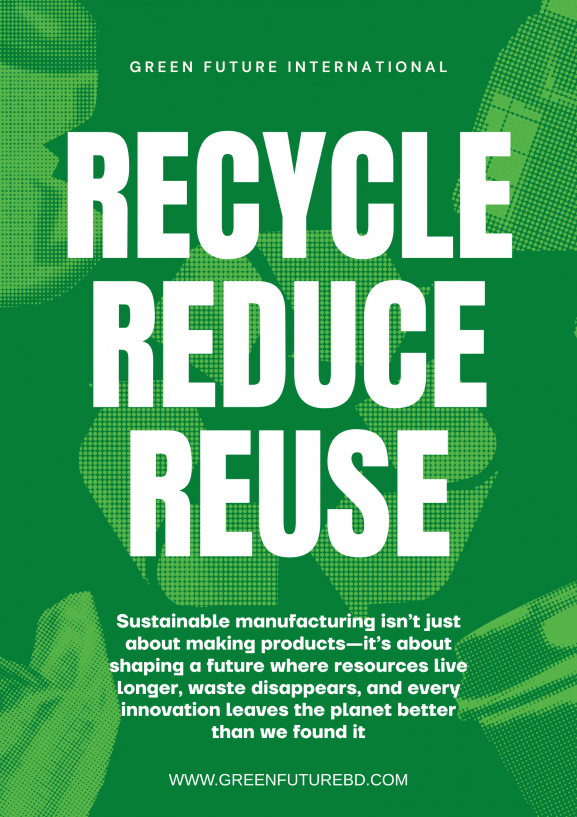
Sustainability is no longer a buzzword—it is a business imperative. As industries around the world face mounting environmental challenges, the call for greener, cleaner, and more responsible practices is louder than ever. For manufacturing companies, adopting the Reuse, Reduce, Recycle (3R) approach is not just about compliance—it’s about ensuring long-term viability, building resilience, and demonstrating leadership in environmental stewardship.
Green Future International (GFI) has been at the forefront of this movement, offering cutting-edge environmental consulting and engineering solutions to industries, municipalities, and private enterprises. From designing advanced effluent treatment plants (ETPs) to delivering sustainable process improvements, GFI’s vision aligns perfectly with the 3R philosophy. In this blog, we will explore how sustainable manufacturing powered by Reuse, Reduce, and Recycle is reshaping industries, and how organizations like GFI and platforms such as greenfuturebd.com are driving this change in action.
Why Sustainable Manufacturing Matters
The global manufacturing sector consumes enormous resources—water, energy, and raw materials—while generating substantial waste, emissions, and effluents. Without change, this cycle accelerates climate change, resource depletion, and ecological imbalance. Sustainable manufacturing offers a holistic solution:
- Environmental Benefits: Cutting down on waste, conserving water, and lowering greenhouse gas emissions.
- Economic Benefits: Optimizing resource use reduces costs and improves operational efficiency.
- Social Benefits: A cleaner production model supports healthier communities and creates green jobs.
By embracing sustainable practices, manufacturers are no longer just producing goods—they are shaping a future where profitability coexists with responsibility.
The 3R Philosophy in Manufacturing
1. Reduce: Minimizing Waste at the Source
Reduction starts with smart design and efficient production systems. By minimizing the consumption of raw materials and energy, industries can lower their environmental footprint. For example:
- Energy-Efficient Machinery: Adopting modern equipment that consumes less electricity.
- Process Optimization: Using lean manufacturing and automation to cut excess production.
- Cleaner Production Inputs: Choosing eco-friendly raw materials that generate less waste.
GFI often works with industries to redesign their production layouts and integrate technologies that reduce resource consumption without compromising output. By applying reduction strategies, companies not only save costs but also position themselves as sustainable leaders.
2. Reuse: Extending the Life of Resources
Reuse is about extending the utility of materials, components, and by-products instead of discarding them. In manufacturing, this can be transformative:
- Water Reuse: Treating industrial effluents through ETPs or advanced membrane bioreactors (MBRs) and reusing the water for cooling, cleaning, or even irrigation.
- Material Recovery: Collecting and reusing scrap metals, plastics, and packaging.
- Industrial Symbiosis: One industry’s by-product becomes another’s raw material—for example, fly ash from power plants used in cement production.
At greenfuturebd.com, companies can learn about customized reuse strategies designed by Green Future International. GFI specializes in water and wastewater management, ensuring industries conserve this critical resource while meeting environmental standards.
3. Recycle: Transforming Waste into Value
Recycling closes the loop by converting waste into usable materials. In sustainable manufacturing, recycling is no longer optional—it is a necessity:
- Plastic Recycling: Turning post-production plastic waste into new packaging or consumer goods.
- Metal Recycling: Melting scrap to manufacture new machinery parts.
- Sludge Management: Converting treated sludge from effluent plants into soil conditioners or fuel.
GFI assists industries in adopting innovative recycling systems that reduce landfill dependence and generate alternative revenue streams. By building recycling into operations, businesses achieve compliance while unlocking long-term sustainability.
Case Studies: 3R in Action
Textile Industry in Bangladesh
The textile sector is Bangladesh’s economic backbone but also a significant polluter. By partnering with Green Future International, textile manufacturers have implemented advanced effluent treatment plants that allow water reuse and sludge recycling, drastically reducing freshwater consumption and waste discharge.
Food and Beverage Manufacturing
GFI has supported food-processing plants in designing sustainable wastewater treatment solutions. Instead of discharging wastewater, industries now reuse treated water for non-potable purposes, achieving both cost savings and compliance with environmental laws.
Steel and Heavy Industry
Industries producing large quantities of solid waste often struggle with disposal. Through Reduce, Reuse, Recycle strategies, GFI has helped steel plants repurpose slag and reuse treated process water, reducing environmental risks while improving efficiency.
Benefits of 3R Implementation in Manufacturing
- Cost Reduction
Reusing water, reducing raw material use, and recycling waste cuts down operational expenses. - Regulatory Compliance
Governments, including Bangladesh’s Department of Environment (DoE), are tightening environmental laws. The 3R approach ensures compliance and avoids costly fines. - Brand Reputation
Today’s customers and international buyers prefer eco-friendly suppliers. Companies that showcase their sustainability efforts win trust and contracts. - Resource Security
As water scarcity and raw material shortages worsen, reusing and recycling secure future supply. - Innovation and Growth
Embracing the 3R philosophy encourages innovation, opening doors to green technologies, new products, and business models.
How Green Future International Leads the Way
At the core of GFI’s mission is helping industries align with global sustainability standards while remaining competitive. Some of their key services include:
- Effluent Treatment Plant (ETP) Design and Implementation
- Water Reuse and Recycling Solutions
- Waste Minimization Consultancy
- Supply of Mechanical and Environmental Equipment
- Environmental Management Plans (EMPs)
Through greenfuturebd.com, companies can explore GFI’s portfolio, learn about sustainable solutions, and engage experts who can turn sustainability goals into practical, measurable outcomes.
Future of Sustainable Manufacturing
Looking ahead, industries will increasingly adopt:
- Circular Economy Models where waste is eliminated entirely.
- Digital Solutions like AI and IoT for monitoring energy and water use in real time.
- Green Energy Integration including solar, wind, and biogas to power factories sustainably.
- Zero-Liquid Discharge (ZLD) systems that ensure complete reuse of water resources.
Green Future International continues to innovate and guide industries on this path, helping them stay ahead in a competitive global market.
The journey toward sustainable manufacturing is not optional—it is urgent and essential. The Reuse, Reduce, Recycle philosophy offers a practical and impactful way for industries to transform operations, cut costs, and build resilience in the face of environmental challenges.
With the expertise of Green Future International and the resources available at greenfuturebd.com, industries can move from intention to action. By embracing the 3Rs, manufacturers not only protect the planet but also create a brighter, greener future for generations to come.
Published on: Tuesday, 30 September 2025, 12:55 pm ▪ Last update: Tuesday, 30 September 2025, 12:56 pm ▪ Total View of this Page: 1238